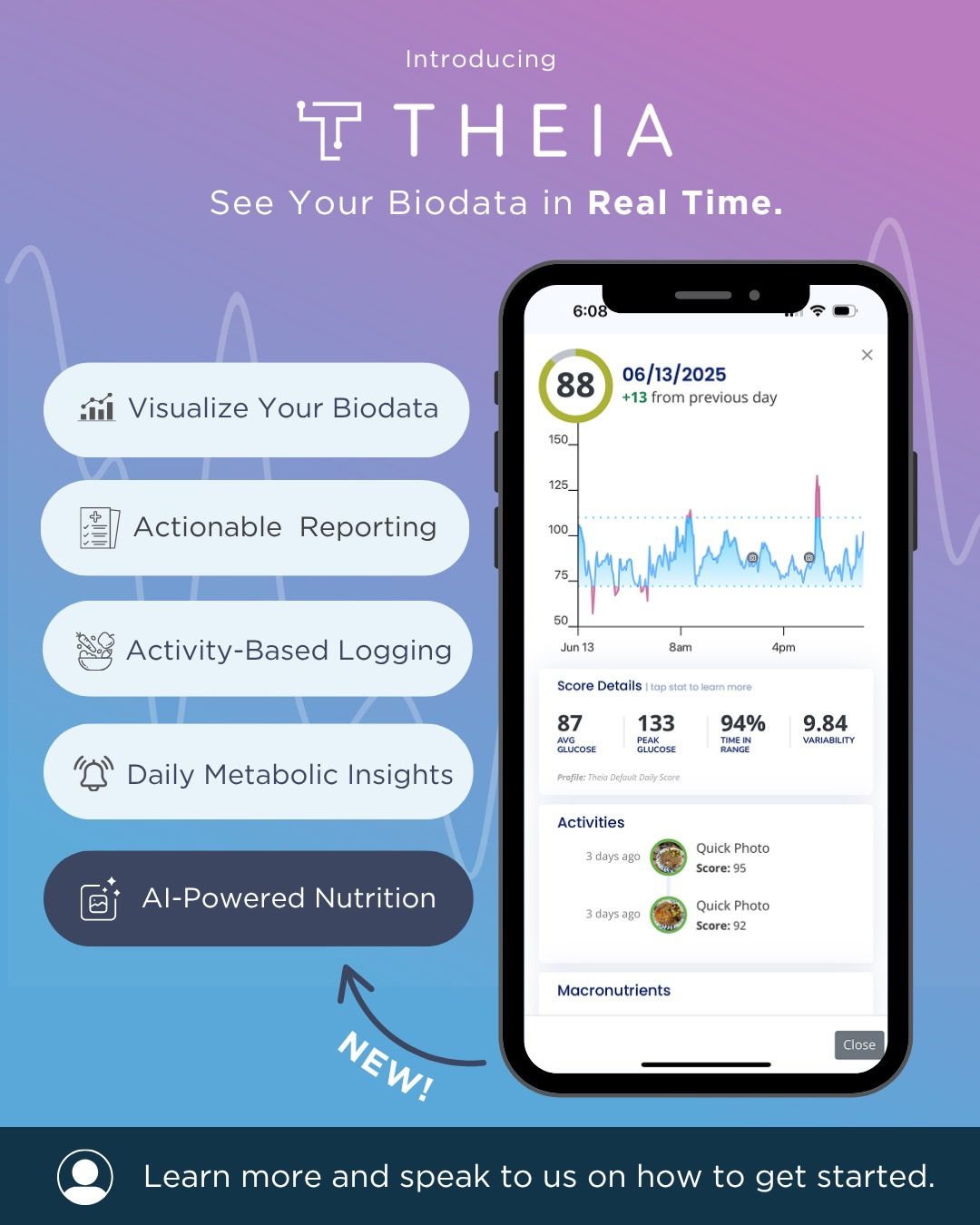
CGM at Optimize by JaeNix is a metabolic optimization tool. Not a diabetes management program. We use it to see how your body responds to food, stress, sleep, hormones, and medications in real time, and we use that data to make your care more precise and more effective.
We partner with Theia Health, which gives us a shared dashboard to review your glucose patterns together. That means you're not staring at a graph trying to figure out what it means on your own. You have a provider interpreting the data in the context of your full clinical picture, including your hormones, your metabolic markers, and whatever else is part of your program here.
Why Glucose Data Matters Even Without a Diabetes Diagnosis
Most people assume glucose monitoring is only relevant if they have diabetes or are at immediate risk of developing it. That assumption causes a significant amount of preventable metabolic dysfunction to go undetected and unaddressed for years.
You can have a normal fasting glucose and a normal A1c and still be experiencing meaningful glucose dysregulation after meals, under stress, and during poor sleep. That dysregulation drives fatigue, cravings, fat storage, poor sleep quality, brain fog, and inflammation long before any standard lab value crosses a diagnostic threshold. CGM makes those invisible patterns visible.
The same meal can produce completely different glucose responses depending on what you ate before it, what time of day it is, how well you slept, and how stressed you are. Standard labs show you none of that.
What CGM Data Actually Shows You
The most consistent feedback from patients who start CGM is that they're surprised by what they didn't know about their own metabolism. Foods they assumed were fine turn out to produce significant spikes. Patterns they attributed to stress or poor sleep turn out to have a clear glucose component. The data changes behavior in ways that advice and general guidelines rarely do, because seeing your own real-time response is a different kind of information than being told what a healthy glucose pattern looks like.
What you'll learn from your CGM data
What the Research Shows About Optimal Glucose Ranges
Standard diagnostic thresholds define normal fasting glucose as under 100 mg/dL and normal post-meal glucose as under 140 mg/dL. Research using CGMs in metabolically healthy individuals consistently shows that optimal patterns exist at substantially lower levels. Metabolically healthy non-diabetics typically show average fasting glucose around 85 to 92 mg/dL, more than 90 percent of time spent between 70 and 140 mg/dL, and average post-meal glucose around 121 to 123 mg/dL with spikes generally under 30 mg/dL above baseline.
Studies have found a three-fold increase in Type 2 diabetes risk when fasting glucose is in the 91 to 99 mg/dL range compared to levels below 83 mg/dL. Higher cardiovascular disease risk appears when fasting glucose is in the 95 to 99 mg/dL range compared to levels below 80 mg/dL. These patterns develop silently for years before any diagnostic threshold gets crossed. CGM is how we identify and address them early.
Who Benefits Most From This Program
CGM is particularly useful at our clinic for patients who are already working on metabolic health and want a more precise picture of what's happening:
- Insulin resistance or metabolic dysfunction where standard labs show borderline but not diagnostic findings
- Weight loss plateaus where caloric and lifestyle efforts aren't producing expected results
- PCOS, where insulin resistance is a core driver that often goes unquantified
- Perimenopause and menopause, where declining estrogen directly reduces insulin sensitivity
- Thyroid dysfunction, which alters glucose metabolism independently of diet
- Patients on GLP-1 medications who want to understand what's happening metabolically alongside weight changes
- Fatigue, brain fog, or energy crashes that may have a glucose component
Program Options and Pricing
Patients can access our CGM program through two pathways depending on how they prefer to obtain sensors. Both include provider-guided interpretation through the Theia Health shared dashboard.
Option 1: Sensors through Theia Health
FreeStyle Libre
Dexcom G7
Option 2: Bring your own sensor
Theia Platform Access Only
No activation fee. Use sensors you source yourself through insurance, manufacturer programs, or pharmacy savings cards. Compatible sensors include Libre 14-day, Libre 2 and 3 (and Plus versions), and Dexcom G7. When clinically appropriate, I can write a prescription to send to your pharmacy to attempt insurance coverage or access manufacturer savings programs. Coverage is not guaranteed and varies by plan and diagnosis.
A note on insurance: I personally used CGM and paid $75 for two sensors through my own insurance. That's an example of what's possible, not a promise of what you'll pay. Your coverage will depend on your plan, your diagnosis, and your pharmacy.
What's Included in Both Options
- Provider-guided CGM use from setup through interpretation
- Access to the Theia Health shared dashboard for real-time and trend review
- Photo-based meal logging with macro and nutrient breakdowns
- Personalized guidance for energy, weight management, and metabolic health based on your actual data
- Integration with any existing hormone, GLP-1, thyroid, or peptide program at our clinic
- Ongoing pattern analysis throughout your program, not just at setup
Frequently Asked Questions
Do I need to have diabetes to use CGM through your clinic?
No. We use CGM as a metabolic optimization tool for patients working on insulin resistance, weight management, metabolic health, GLP-1 therapy, and hormonal transitions. A diabetes diagnosis is not required. Eligibility is assessed at consultation.
What's the difference between using Theia Health and just buying an OTC CGM like Stelo?
OTC devices like Stelo are useful for general education and pattern awareness, and we support patients using them. The difference with Theia is that you have a provider reviewing your data in the context of your full clinical picture, including your labs, your medications, and your hormone status. The data becomes clinically actionable rather than something you're interpreting on your own.
Can I use CGM alongside my GLP-1 medication?
Yes, and for most GLP-1 patients it adds meaningful value. Semaglutide and tirzepatide change how your body processes glucose and manages appetite, but they don't tell you which foods are still producing spikes, whether your protein intake is adequate, or how your metabolic rate is responding over time. CGM answers those questions directly.
I'm in perimenopause and my metabolism has changed. Would CGM help?
Very likely. Declining estrogen during perimenopause reduces insulin sensitivity, which changes how your body responds to carbohydrates, handles stress glucose, and manages energy between meals. CGM makes those changes visible and helps us adjust your plan accordingly rather than guessing at what's driving the metabolic shift you're experiencing.
How do I get started?
CGM can be added during a new consultation or layered into an existing program at Optimize by JaeNix. If you're already a patient, contact us directly and we'll determine which sensor option makes sense for your situation. If you're new, book a consultation and we'll include CGM in the conversation about your metabolic goals.
Metabolic Health · Dallas, TX
Stop guessing at your metabolism. See it.
CGM can be added to any existing program or discussed at your first consultation. If you're not sure whether it's right for your situation, we can figure that out together.
Book a Consultation in DallasOr call us at 214-890-6180 · Telehealth available across TX, CO, FL, IA, VT, VA, WA, CT