BHRT and Peptide Therapy for Women Over 40: What They Are, How They Work, and Why They're Better Together
A lot of women in their 40s and 50s come to us after years of being told their labs are normal. They are exhausted, gaining weight without explanation, sleeping poorly, and feeling like a version of themselves they do not recognize. The labs are normal. The doctors say it is aging. But something is clearly off.
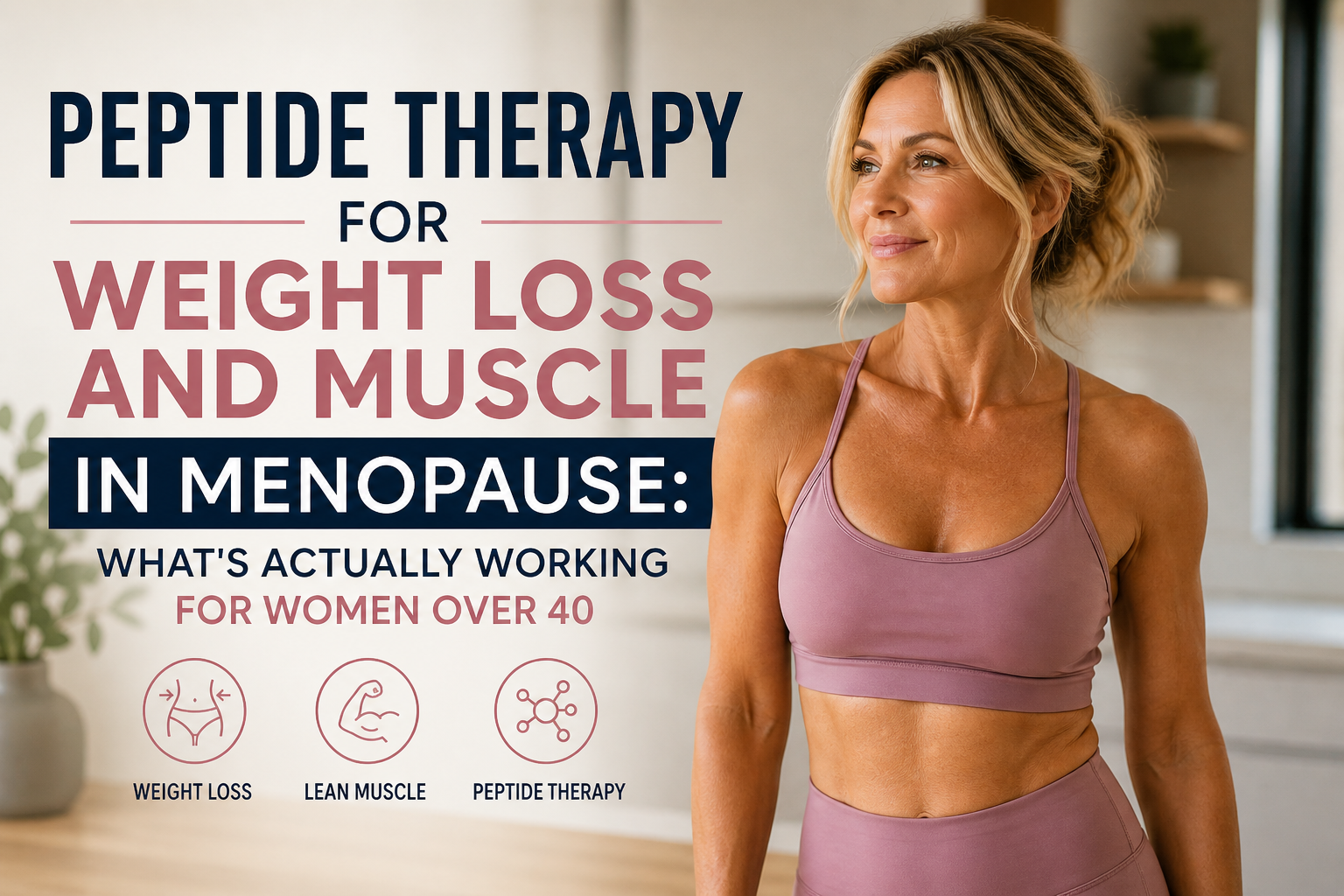
What is often happening is a hormonal and cellular shift that standard medicine is not designed to catch. Bioidentical hormone replacement therapy (BHRT) and peptide therapy are two of the most effective tools we have for women who want to address the root cause of what they are experiencing, not just push through it.
What Is BHRT?
Bioidentical hormone replacement therapy uses hormones that are molecularly identical to the ones your body naturally produces, including estrogen, progesterone, and testosterone. That is the key distinction from conventional synthetic HRT, where the hormones are chemically modified to be patentable. Bioidentical hormones are built to fit your receptors the way your own hormones do.
Hormones do a lot more than most people realize. Distinguished Hormone Scholar Dr. Lindsey Berkson describes them as the body's physiologic internet. They carry signals to the brain, the gut, the immune system, the heart, and the bones. Not just the ovaries. When estrogen, progesterone, and testosterone decline through perimenopause and menopause, those signals go quiet across every system in the body at once.
Benefits of BHRT may include:
- Restored energy and reduced fatigue
- Improved cognitive clarity and memory
- Better body weight regulation and lean muscle retention
- Stronger bone density
- Improved cardiovascular health
- Reduced systemic inflammation
- Better sleep quality
- Restored libido and mood stability
Looking for BHRT in Dallas or via telehealth? Optimize by JaeNix sees patients in person near the Galleria and via telehealth in TX, CO, FL, IA, VT, VA, WA, and CT. Reach out to schedule.
What Is Peptide Therapy?
Peptides are short chains of amino acids that act as signaling molecules in the body. They do not replace anything or override your biology. They talk to specific cells and instruct them to repair, reduce inflammation, regenerate, or produce something the body has slowed down making on its own.
Think of hormones as the body's broad communication network and peptides as targeted messages sent to specific recipients. Peptide therapy has become one of the fastest-growing areas in functional and regenerative medicine because the results, when protocols are matched to individual biology, can be meaningful and relatively well-tolerated.
BPC-157 (Body Protection Compound)
BPC-157 has extensive research behind it for reducing systemic inflammation, supporting gut healing, and promoting tissue repair. It is especially relevant for women dealing with chronic inflammation, digestive issues, or joint discomfort that seems to have worsened in midlife.
Sermorelin
Sermorelin works by stimulating the pituitary to produce growth hormone naturally rather than introducing it synthetically. Growth hormone supports lean muscle retention, fat metabolism, cellular repair, and sleep quality. It is typically run in 12-week cycles and works best when taken in alignment with the body's overnight repair window.
GHK-Cu (Copper Peptide)
GHK-Cu has a strong research profile for neurological repair, skin regeneration, and mood support. It reduces oxidative stress and appears to support cognitive resilience, which makes it particularly relevant for women experiencing the mental and emotional flatness that can accompany hormonal decline.
NAD+ (Nicotinamide Adenine Dinucleotide)
NAD+ is essential for mitochondrial function and cellular energy production. Levels drop significantly with age, and low NAD+ is tied directly to fatigue, brain fog, and accelerated cellular aging. Supplementing NAD+ gives cells the fuel they need to work better.
Tirzepatide
Tirzepatide is a GLP-1/GIP receptor agonist used for blood sugar regulation, appetite support, and metabolic stabilization. In midlife women, particularly those gaining weight in the midsection despite a clean diet, it can help address the insulin resistance that is often driving the problem.
Why These Two Approaches Work Better Together
Most practitioners treat BHRT and peptide therapy as separate conversations. They are not. The research shows they reinforce each other in ways that make both more effective.
Peptides act as non-genomic signalers, meaning they work at the cell membrane rather than inside the nucleus. That pathway overlaps with how BHRT hormones work at the non-genomic level, so peptides appear to amplify the effectiveness of hormonal signals in the body. At the same time, estrogen supports healthy gut function including the parietal cells involved in absorption, which means BHRT creates a better environment for oral peptides to actually be absorbed and used.
Both approaches also work on neuroinflammation. Estrogen and specific peptides both function as glial cell modulators, meaning they regulate the brain's immune cells. That has direct implications for memory, cognitive clarity, and long-term brain health. And both estrogen and peptides like BPC-157 reduce systemic inflammation through complementary mechanisms, creating an anti-inflammatory environment that neither achieves as well on its own.
Who Is a Good Candidate?
Women who respond best to these protocols tend to share a specific frustration. They have been doing everything right: clean eating, regular exercise, stress management. Their labs come back normal. Their doctors say it is aging. And they know something is being missed.
That is not a motivation problem. It is a precision medicine gap.
If any of the following sound familiar, a complete hormonal evaluation is worth having:
- Fatigue that does not improve with rest
- Brain fog, word-finding difficulty, or memory gaps
- Abdominal weight gain despite no changes in diet or exercise
- Trouble falling asleep, staying asleep, or waking unrefreshed
- Mood instability or low-grade anxiety without a clear trigger
- Reduced libido
- Hot flashes or night sweats
- Muscle loss despite consistent training
- Skin changes, hair thinning, or new joint discomfort
Frequently Asked Questions
What is the difference between BHRT and regular HRT?
Conventional HRT typically uses synthetic hormones that have been chemically altered or derived from animal sources. BHRT uses hormones that are molecularly identical to the ones your body produces, so they fit your receptors more precisely. Both have a role depending on the patient, but the molecular match is why many women and providers prefer the bioidentical approach.
Is peptide therapy safe for women?
Peptide therapy generally has a favorable safety profile, especially when prescribed and monitored by a qualified provider. Because peptides work with existing biological pathways rather than overriding them, the risk profile is lower than many pharmaceutical options. Individual response varies and proper labs and monitoring are part of responsible prescribing.
Can I do BHRT and peptide therapy at the same time?
Yes, and the research suggests they are more effective when used together. A provider experienced in both can build a protocol where each layer enhances the other rather than treating them as separate tracks.
How long before I feel results?
Many women notice improvements in sleep, energy, and mood within two to four weeks. More significant shifts in body composition, cognitive function, and inflammatory markers tend to show up over 60 to 90 days.
What labs do I need before starting BHRT?
A complete hormone panel covering estrogen, progesterone, testosterone, DHEA, cortisol, thyroid markers, FSH, and insulin gives a solid baseline. Depending on your symptoms, your provider may also include inflammatory markers, metabolic panels, and nutrient levels. At Optimize by JaeNix, every hormone program starts with a thorough lab review.
Is BHRT available via telehealth in Texas?
Yes. We offer telehealth BHRT consultations and ongoing care for patients in Texas and several other states. Lab draws can typically be arranged near you.
Start With a Complete Clinical Picture
Hormone optimization at Optimize by JaeNix begins with labs and an individualized evaluation. In-person in Dallas near the Galleria, or telehealth across TX, CO, FL, IA, VT, VA, WA, and CT.
Book a Consultation